Saturday, September 28, 2013

"We are FUNtastic Philippines"


Established on th 22nd of September in 2012, We are FUNtastic Philippines is a group composed of fun-loving Filipinos living worldwide. Assisted by friends from different countries whose primary objctive is to showcase the beauty of th Philippines and invite visitors to visit it's 7,107 islands and experience the culture and hospitality of the Filipinos. https://www.facebook.com/groups/we.are.funtastic.philippines/

The group's primary purpose is to promote Philippine tourism through the collection of photos taken all over the Philippines. The group is also responsible for creating awareness locally through the organization of FUNLakwatsa events. A photowalk event that focuses on the highlights of a particular tourist spot or festival.

Just recently, WAFP (short term for We are FUNtastic Philippines) have celebrated it's first year of existence.
With now 35 administrators and more than 74 thousands members, our advocacy will continue.

Sunday, September 15, 2013

PHILIPPINE FESTIVAL


The Philippines, with it's dot-like shape on th map, is an island of great and rich culture. The flag's 8 sunrays and the three stars represent the noble deeds of the country's people and the bright culture it holds. The changes that happened in the land are not just the results from years of invasion but also the drive of it's people to make the Filipinos rise above all. The skills and talents that the natives have acquired are prerogatives, but there's one distinctive mark that the land is known for, th celebration of festivals at it's very best.


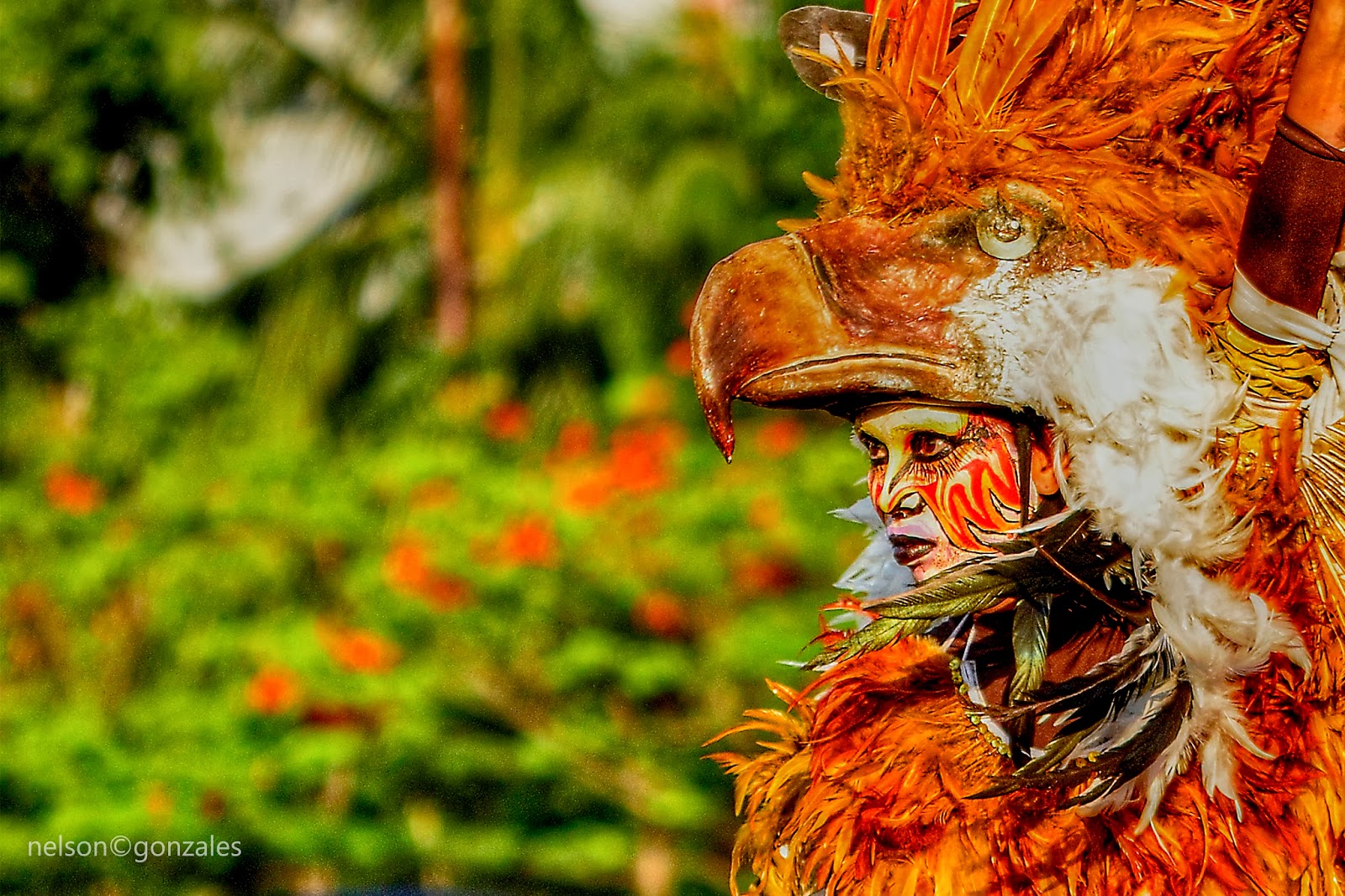
   People all over the 7,107 islands of the Philippines celebrates festivals all year round. Religious feast are often celebrated in honor of a saint; while cultural festivals focus more on the unique aspect of the place or historical events; and a seasonal festival is a mere celebration of a bountiful harvest. Each festival is highly anticipated by the locals and tourist alike, as they look forward to watching great scenes along the streets, to move as dancers enliven one’s spirit through the beat of the drums, to gaze upon the product of man’s creative minds and hands through the costumes, display of masks or the creation of the giants, to be entertained by the synchronize movements of the colourful costumes worn by the street dancers, to be amazed by the parades of giant colourful flowers as they give pleasure to one’s eye. The crowds also await and pave the way for the parade of Philippine animals dressed like humans as they perform in the streets.


           Festivals are part of our culture, it uplifts the spirit of every Filipino and it is a great manifestation of unique talents. Filipinos love to celebrate even life’s simplicity. They laugh in the midst of a calamity thus there’s no reason for them not to celebrate life’s goodness. For them almost everything calls for a celebration and festival is a tool for unity and togetherness, a cultural aspect that is being passed on from generation to generation.
Article written by Nelson Gonzales, a high school teacher at Colegio de San Lorenzo in Pampanga, a hobbyist photographer of landscape, street photography and festivals, and is one of the Administrator of  We are FUNtastic Philippines

WAFP FUNLakwatsa group recently experienced the dazzling display of costumes in Pahiyas Quezon, the most energetic performance of Dinagyang Iloilo, the colorful parade of Ibon-Ebon Pampanga, the excitement of Hot Air Balloon, the exquisite cuisine and most especially the hospitality and merriment that these festival offers. Other festivals worth experiencing are Sinulog in Cebu, , Maskara Festival in Bacolod, Morions in Marinduque, Pintados in Tacloban, Panagbenga in Baguio, Higantes in Angono Rizal, Kadayawan in Davao and more! For more information on Philippine Festivals, join us at https://www.facebook.com/groups/we.are.funtastic.philippines/

Article published on Sept 2013 for HKLife Newspaper in Hong Kong Filipino Community

Saturday, August 31, 2013

WAFP FUNlakwatsa @ Lobo Batangas June 29, 2013


The reports are true! The gWAFPos and gWAFPas of "WAFP" has invaded the Atis Capital of the Philippines! WAFP members (Professionals, Photographers and Students) from everywhere in the Philippines have gathered to this wonderful town of Lobo to discover and exprience the untouched beauty and of course to savor and taste it's bountiful produce,  the sweet and tasty "Atis".

Lobo (Lu-bo/pronounced like tubo - sugarcane) got it's name during the middle part of the Spanish regime. One evening a group of settlers residing in the place called Poblacion, gathered together to talk and decide as to what name they will call the place, when suddenly over Mt. Banoy they saw a balloon. The balloon which was believed to have flown from then the town of Batangas, while the they are confidentially celebrating the eve of their town fiesta.  Because of that very wonderful incident, they unanimously agreed that "LOBO" meaning balloon be adopted. Lobo was founded on September 27, 1871.-WOWBatangas.com


At meeting time of 5:00am, the happy group of about 60 gWAFPos and gWAFPas on convoy took the route going to Batangas via SLEX (South Luzon Expressway), CALABARZON - Star toll ways exiting Balagtas, Batangas then taking the National road (Gov. Antonio Carpio) going to Lobo Proper.


The group arrived at the town of Lobo at around 7:30am and met with local tourism officer Mr. Roubin Ayag outside the St. Michael Archangel Parish Church. After a short briefing, the group listen intently about the history of Lobo during the orientation. Excitement started to build up, pumped up photographers shouts out the groups battle cry, "WE ARE FUNTASTIC PHILIPPINES"!  


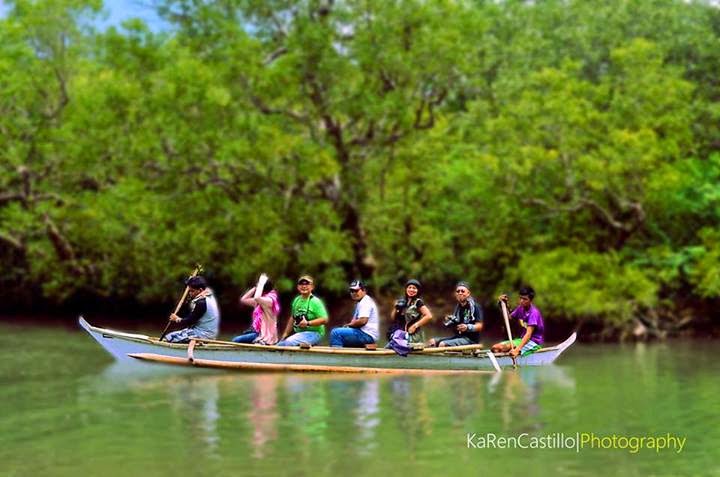
 First stop is the Mangrove swamp forest at The Batangas State University extension campus in Brgy. Lagadlarin. We were all ears as the people managing the Campus informed us about the importance of the Mangrove trees in the community and most specially the environment.Boats were hired to accommodate the group during the ride along the mangrove forest. 


Next stop is Known as the Faro de Punta de Malabrigo, Designed in 1891 by Guillermo Brockman, and built by by Jose Garcia in 1896,declared as national landmark in November 27, 2006. An outstanding work of architecture from the spanish colonial period. The parola guides the seafarers passing the Verde Island Passage to Tayabas Bay. 
In many ways, Malabrigo in Lobo, Batangas is not your ordinary white beach it has a different characteristic because it's not sandy but it is littered w/ pebbles. The shorelines are filled with pebble stones of different sizes, which makes the water clearer than any normal sandy beach. However, the stones are not rough ones. According to a local, the stone are carried to the shore during monsoon months. 


During the break, there are group games prepared for the FUNLakwatsa members. It is a regular part of program to establish fun and camaraderie among the WAFP members.


And of course food, very FUNLakwatsa is an opportunity to practice the traditional food fest called "boodle fight" where everybody shares whatever is served.


Interview with Councilor Ilagan about Lobo, Batangas      PTV4 crew is also present during the FUNLakwatsa to cover the event for media exposure :)


For more photos about the event click on
  
https://www.facebook.com/media/set/?set=oa.472196762858556&type=1

Join our WAFP FUNLakwatsa, get some updates  https://www.facebook.com/groups/we.are.funtastic.philippines/


Thursday, August 15, 2013

Spanish Era in the Philippines


The Age of Discovery in the 1400s, during which the spice trade became an influential acivity for European traders, had led to the discovery of new routes to avoid the hold of Venice and control by the Ottoman Turks. We have learned from history books the two superpowers during that time were Spain and Portugal. With each competing to discover new lands and routes to please their own kings.
The Philippine islands first came to the attention of Europeans through the Spanish expedition that happened around the world and was led by Portuguese explorer Ferdinand Magellan in 1521. Magellan landed on the island of Cebu, claiming the lands for Spain and naming them Islas de San Lazaro. He then set up friendly relations with some of the local chieftains and converted some to Catholicism. However, Magellan was later killed by natives led by a local chief named Lapu-Lapu, who was against foreign domination.


Forty five years later, in 1565, another Spanish expedition led by Miguel López de Legazpi, the first Governor-General of the Philippines arrived in Cebu from New Spain (Mexico). Then on June 24, 1571, Spanish conquistador Miguel López de Legazpi exercised rule of the Spanish city of Manilawith the establishment of a city council in what today is called the district of Intramuros. Referred to as the WalledCity, the original fortified city of Manila was the capital and seat of the Spanish government for 333 years. Construction of the defensive walls was started by the Spanish colonial government in the late 16th century, which lasted for 250 years with continuous reconstruction and restoration to protect the city from foreign invasions. Intramuros was also occupied by the British, Americans and the Japanese after the Spanish rule. Intramuros was heavily damaged during the Liberation of Manila from the Japanese Imperial Army during World War II.


To experience the effect that four centuries worth of Spanish influence in the Philippines, you can visit five UNESCO World Heritage sites like the historic town of Vigan, the baroque churches of San Agustin in Intramuros, Miag-ao in Iloilo, Paoay and Santa Maria from the Ilocos province. The  Casa Manila in Intramuros is a colonial lifestyle museum from the 1800s. You can also visit the Spanish forts in Fort Santiago, Manila and Fort San Pedro, Cebu. Top universities like the Ateneo de Manila and University of Santo Tomas was first established in Intramuros. The Spanish language is still incorporated with our daily life and studies up to the present time.
Written by Ronnie Gador, a part time university lecturer in History, a London Blue Badge-trained Mabuhay Guide by the Department of Tourism in the Philippines and is one of the administrators of We Are FUNtastic Philippines.
The “WAFP”  Manila FUNLakwatsa held last Jan. 12 included some  Spanish landmarks like PACO PARK (a Spanish cemetery), RIZAL PARK (where the execution of 
Dr. José Rizal sparked the fire of the Philippine Revolution against the Spanish colonizers)  and INTRAMUROS (where you can find Fort Santiago, San Agustin Church, Manila Cathedral, Palacio del Gobernador and other ruins.

The WAFP’s upcoming events on Sept 21 and 28 will coincide w/ the group’s one year anniversary. Come and join us! Details of events is in our website
https://www.facebook.com/groups/we.are.funtastic.philippines/ . Spread the word and invite your friends and family to come join the fun for a cause. 


Article published on August 2013 for HKLife Newspaper in Hong Kong Filipino Community


Monday, July 15, 2013

We are FUNtastic Philippines


PHILIPPINES is a country with an abundant things to offer. From the pristine beaches, to UNESCO sites, paradise islands, sports and water adventures, great reefs for diving, cuisine and more. The country’s rich culture and warm hospitality is just few of the perks to experience when visiting. One of the most common is
“
BAYANIHAN” – the Filipino spirit of communal unity, cooperation and hospitality. A culture that is being practiced from generation. It is the same attribute that drives people from all over the world to unite for a common goal, that is to promote the Philippines. Through an internet network called Facebook, “We are FUNtastic Philippines” is created, where the primary goal is to show the beauty of the Philippines to the whole world. It’s composed of more than 68,000 members mostly professionals, students and photo enthusiasts. The site is managed by 34 administrators, both abroad and local residents, who are 24/7 deeply engaged in the advocacy.


WAFP as it is sometimes fondly called, has opened awareness on the several undiscovered vacation destinations in the Philippines not only for foreigners but most specially to our many balikbayans and other Filipino overseas workers who have taken time to be in touch with their kababayans in the Facebook site while abroad. The group has also guided our returning kababayans (oftentimes with their foreign guests), where to spend their next vacation in the Philippines. For the site provides photo albums of every province and where all essential questions maybe asked to the 74K+ members who are always in active exchange.
The WAFP and it's photography Club have organized meet ups/ photowalk in several
provinces and tourism events and festivals. Thus creating awareness and promotion  to raise participation of local tourist. The members captured verymoment and shared these in the WAFP site.
The "We are FUNtastic Philippines" family continues to grow everyday. Everyone with a facebook account is invited to join us. Just go to the site and join in with your account. That's all it takes for one to see the magic and exprience the beautiful country of  Philippines in colorful and vivid pictures! Come and join us and become one of our "Proud Global Ambassadors" at "We are FUNtastic Philippines" site.


Article published on July 2013 for HKLife Newspaper in Hong Kong Filipino Community